
Scam Awareness
Fake courier and India Post ‘customs/undelivered parcel’ scams: how they work and how to stay safe
LinkExpln Team · Published November 13, 2026
Many people first ask the same thing: Is this parcel message real, or is it a scam? In many cases, if someone contacts you out of the blue claiming your courier, India Post package, or international parcel is held at customs and asks for Aadhaar, PAN, OTPs, or a small UPI/card payment, it is safest to assume it could be fraudulent until you verify it through official channels.
Key takeaway
A real delivery issue should be verifiable on the courier’s official website or customer support channel. Do not share identity documents, card details, UPI PIN, or OTPs based only on a call, SMS, WhatsApp message, or a link in a message. If a link is involved, you can first check it with the LinkExpln scanner.
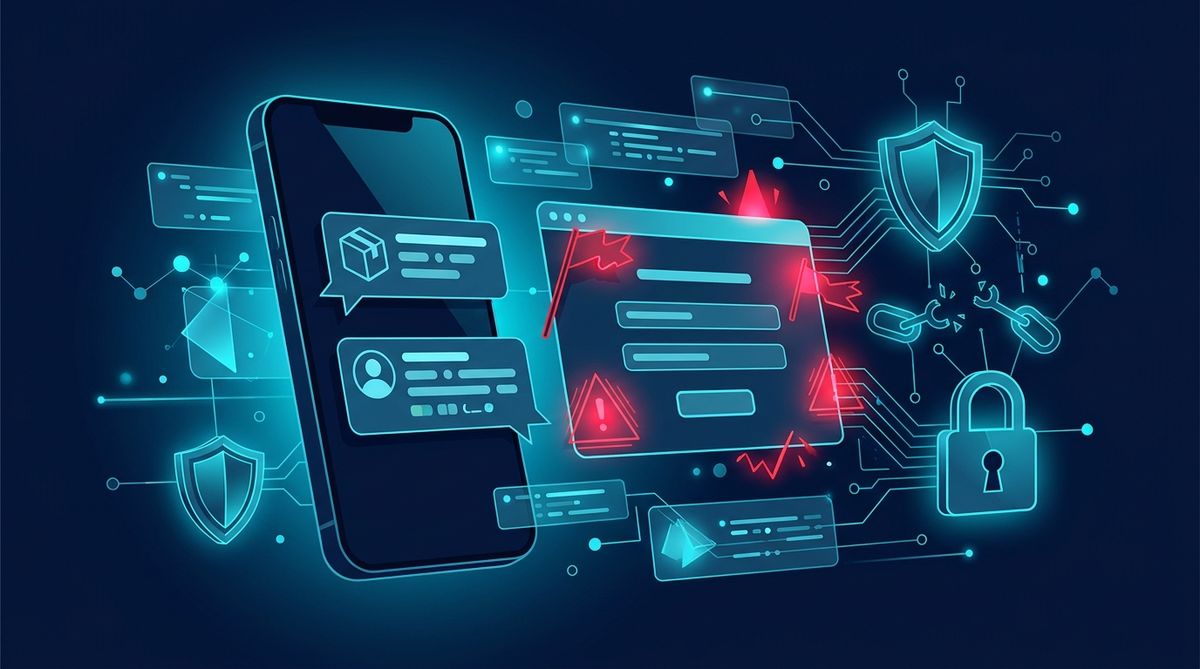 Illustrative image (AI-generated).
How this shipping-pretext scam usually works
This scam uses a familiar story: a parcel is delayed, undelivered, stopped by customs, or returned to sender. The scammer’s goal is usually one of three things:
- Steal money through a fake payment request.
- Steal personal information such as Aadhaar, PAN, address, or card details.
- Push you to reveal an OTP or approve a UPI collect request.
The contact may come through:
- A phone call claiming to be from a courier company, India Post, customs, or airport cargo
- An SMS saying your parcel cannot be delivered unless you update details
- A WhatsApp message with a tracking link or payment page
- A phishing website made to look like a postal or delivery service page
Scammers rely on urgency: “Pay ₹25 now,” “Your parcel will be destroyed,” “Customs case will be filed,” or “KYC required immediately.” India’s national cybercrime reporting portal warns citizens to be cautious with online fraud involving fake communications and to report cyber financial fraud quickly through official channels at cybercrime.gov.in. CERT-In also publishes official cybersecurity advisories and safety guidance at cert-in.org.in.
Why the scam works so well
Delivery messages are believable because many people are actually expecting parcels. A small payment request can also feel harmless. That is exactly why this scam works: the amount is kept low enough to reduce suspicion, while the real target may be your card details, identity documents, or account access.
Sometimes the scam starts with a “failed delivery” message. In other cases, the caller says a parcel sent in your name contains illegal goods, drugs, or suspicious items and that you must “verify” your identity. That version can become much more serious, because fear may push victims to share sensitive information or transfer money.
Common warning signs to watch for
1. You are pressured to act immediately
Phrases like “within 10 minutes,” “final notice,” or “parcel will be seized” are classic pressure tactics.
2. The sender asks for Aadhaar, PAN, OTP, or UPI PIN
A request for sensitive personal or banking details over call, SMS, or WhatsApp is a major red flag. The Reserve Bank of India repeatedly advises people not to share confidential banking credentials such as OTPs or PINs and to be alert to social-engineering frauds via calls and messages at rbi.org.in.
3. The payment link or website looks slightly wrong
The website may copy branding, logos, and tracking layouts, but the domain name may be misspelled, unusually long, or unrelated to the real organisation. Before opening or interacting, you can report a suspicious link or scan it.
4. The amount requested is very small
A “customs fee” or “redelivery charge” of ₹10, ₹25, or ₹49 is often used to lower your guard. Once you enter card details or approve a UPI request, the scammer may try to misuse them.
5. The story changes when you ask questions
If you ask for a tracking number, official order reference, or exact courier name, the caller may become vague, angry, or more threatening.
6. The contact comes from a personal mobile number or random WhatsApp account
Official organisations usually have formal support channels. A random number with poor grammar, odd formatting, or inconsistent identity is suspicious.
How the scam spreads across phone, SMS, WhatsApp, and fake pages
Phone calls
The caller claims to be from a courier company, India Post, customs, or law enforcement. They may already know your name or number, which makes the call sound convincing. They then ask you to confirm identity details or make a payment.
SMS messages
These often mention a delivery failure, address mismatch, or customs hold. The key risk is the link, which may lead to a phishing page that asks for personal data or payment information.
WhatsApp messages
WhatsApp scams often feel more informal and urgent. You might receive a screenshot of a fake parcel receipt, a “payment QR code,” or a shortened link. WhatsApp advises users to be cautious with unexpected messages, verification codes, and requests for money or sensitive information through its official safety guidance at faq.whatsapp.com.
Phishing pages
These pages may copy India Post or courier branding and ask you to:
- Enter your mobile number and address
- Upload Aadhaar or PAN
- Provide card details for a nominal charge
- Approve a UPI collect request
- Enter an OTP supposedly to “confirm delivery”
That information can then be used for fraud, identity misuse, or additional scam attempts.
What to do if you get one of these messages
Step 1: Stop and verify independently
Do not use the number or link in the message. Instead, visit the organisation’s official website yourself or call the customer care number listed there.
Step 2: Check whether you were actually expecting a parcel
If you did not order anything, or if no one you know sent you a package, be extra cautious.
Step 3: Inspect the link carefully
Look for misspellings, extra characters, unrelated domains, or shortened URLs. If you want a quick risk check, use the LinkExpln scanner and review how LinkExpln works.
Step 4: Never share OTPs, UPI PINs, or full card details
A legitimate delivery update should not require your UPI PIN or an OTP shared over the phone.
Step 5: Do not upload Aadhaar or PAN unless you have independently confirmed the request
If identity verification is genuinely needed, complete it only through the official website or verified support process of the real organisation.
If you already paid or shared details
Act quickly. Speed matters in payment fraud cases.
If you shared card or banking details
- Contact your bank immediately and ask them to block or secure the card/account.
- Monitor transactions and change relevant passwords.
- If you shared an OTP or approved a suspicious UPI request, tell your bank exactly what happened.
If you sent money through UPI or card
- Report the incident immediately via your bank or payment app.
- File a complaint on the National Cyber Crime Reporting Portal: cybercrime.gov.in.
- If it is a live financial fraud situation, use the official cybercrime helpline options listed there as quickly as possible.
If you shared Aadhaar or PAN
- Keep records of what was shared and when.
- Watch for unusual financial or account activity.
- Be cautious of follow-up calls, since scammers often reuse leaked data in future fraud attempts.
Illustrative example
Illustrative example: “Your India Post parcel is on hold at customs. Pay ₹25 now to avoid return: indiapost-track-help.example”
This example shows the typical pattern: urgency, a small payment, and a link that may imitate a trusted brand.
Practical habits that reduce your risk
- Track parcels only through the seller app or the courier’s official website.
- Avoid tapping delivery links received unexpectedly by SMS or WhatsApp.
- Turn on transaction alerts for your bank and cards.
- Slow down when a message creates fear or urgency.
- Review basic security practices for spotting phishing and scam links.
- Tell family members, especially older adults and teenagers, that small “delivery fee” requests can be scams too.
FAQ
Can a real courier ask for a payment before delivery?
Sometimes legitimate delivery or customs charges can exist, but you should verify them only through the courier’s or seller’s official app, website, or customer support. Do not trust links or numbers sent in an unexpected message.
Is a small ₹10 or ₹25 request safe to pay?
Not necessarily. Small amounts are commonly used to make the request seem harmless. The bigger risk may be the payment credentials or identity details you enter.
What if the caller says a parcel in my name contains illegal items?
Do not panic. End the call and verify independently through official channels. If the call includes threats, demands for secrecy, or urgent payments, treat it as highly suspicious and report it.
Conclusion
Fake parcel, customs, and undelivered-shipment scams work because they sound ordinary and urgent at the same time. The safest next step is simple: do not trust the message itself—verify the parcel independently, avoid sharing Aadhaar, PAN, OTPs, or UPI PINs, and scan any suspicious link before opening it.
Stay Protected
Not sure about a link you received? Check it with the LinkExpln scanner or learn how LinkExpln works.
More articles